Build a Life That Truly Matters
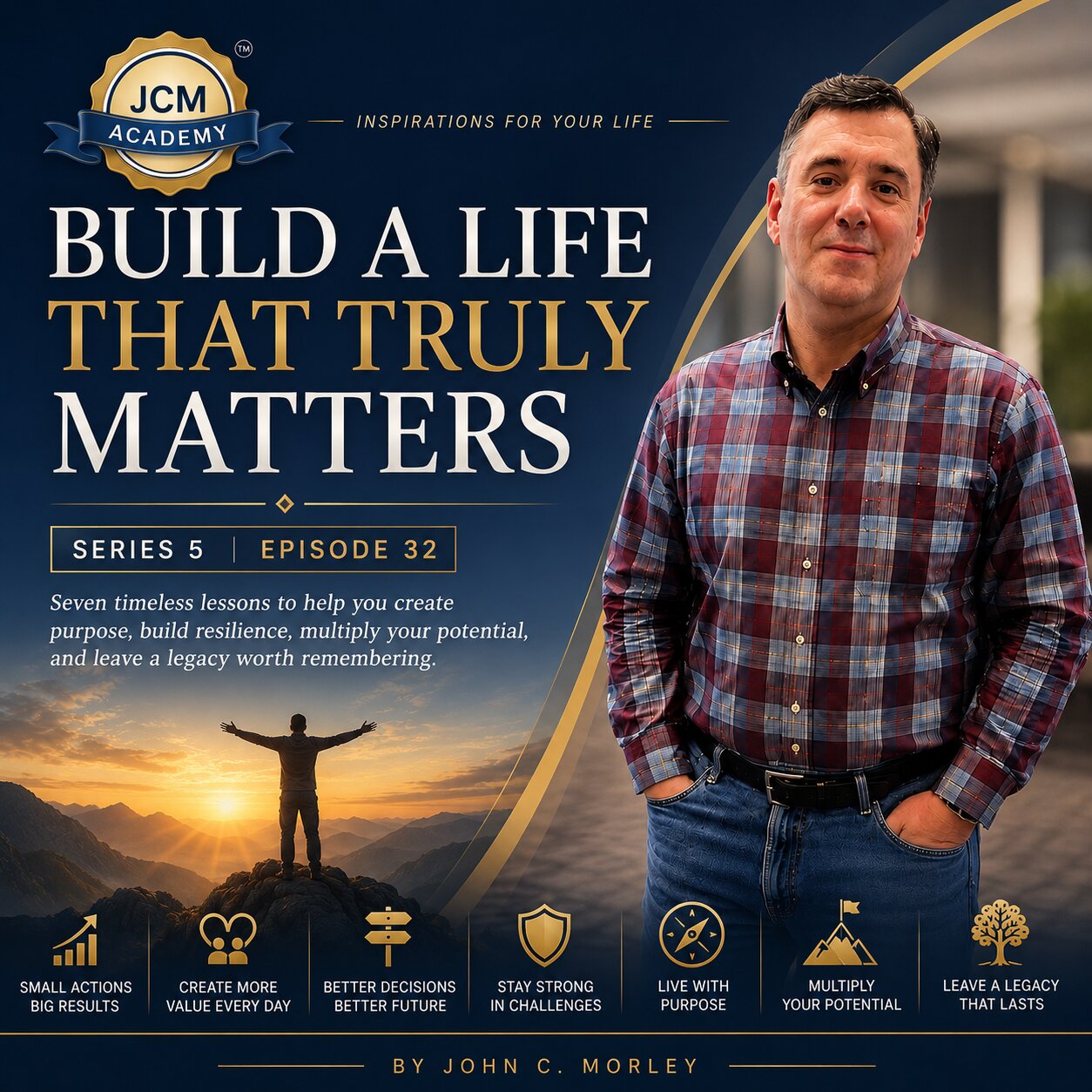
Build a Life That Truly Matters
There comes a point in life when achievement alone no longer answers the questions that matter most. We spend years chasing the next promotion, the next degree, the next milestone, and those accomplishments deserve to be celebrated. But there's a real difference between accumulating achievements and building a life that feels meaningful once we look past résumés, titles, and recognition. Eventually, the question shifts from how much I have accomplished to what those accomplishments have allowed me to contribute, who I have become along the way, and whether the direction I'm traveling is still the one I actually want.
This question matters especially for ambitious people, because high achievers are exceptionally good at moving forward. They tolerate pressure, solve hard problems, and keep pushing long after others would stop. Those qualities create extraordinary opportunities, but they also make it easy to stay busy without ever examining the larger direction of a life. Someone can look successful from the outside while privately feeling stuck, disconnected, or emotionally exhausted.
This is why questions like "why do I feel stuck?" resonate so widely. Feeling stuck doesn't require a lack of accomplishment; often, the opposite is true. A person keeps meeting deadlines and earning recognition while quietly losing the meaning that once fueled the effort. When productivity becomes identity, there's always another task, and burnout follows.
Building a life that truly matters requires a broader definition of success, one that asks not just what we've accumulated, but what has become better because we were here. Did our work solve meaningful problems? Did we strengthen the relationships entrusted to us? Did we keep our promises when it was inconvenient? None of this requires abandoning ambition; ambition connected to purpose is one of the most constructive forces in a person's life. The key question is what sits underneath the ambition. When there's a meaningful reason behind what we pursue, achievement becomes part of a larger mission rather than an endless attempt to prove our worth.
That distinction sits at the heart of this week's Inspirations for Your Life series, "Build a Life That Truly Matters" (S5 S32). Across seven episodes, we examine the forces that gradually shape a meaningful life, from small daily actions to value creation, decision-making, resilience, purpose, potential, and legacy. These aren't seven unrelated ideas; they're stages of the same journey, because the legacy we leave is shaped by the values we practice and the small actions we repeat today.
How Small Actions Create Extraordinary Results (S5) S32:E1
We usually encounter success only after the hard, invisible work is done, the finished book, not the years of pages written when nobody was watching. Because we see the result rather than the process, success looks far more sudden than it actually was.
The core principle here is simple to understand but hard to trust while waiting for progress: meaningful results develop through actions that initially seem too small to matter. One workout won't transform your health, one conversation won't build a relationship, but repeated consistently, small actions compound. Pages become chapters, practice becomes competence, and savings become capital.
The difficulty is that we want evidence that our effort is working, and real progress often develops before it becomes visible. This is where consistency beats occasional intensity. A person who exercises consistently for years will generally outpace someone who repeatedly starts extreme programs and quits. The individual actions stay small; time gives them leverage.
Small actions are also psychologically manageable. "Transform your whole life" causes paralysis; "make today's better decision" is actionable. The same compounding logic applies in reverse: one postponed responsibility rarely matters, but a pattern of avoidance does; one distracted evening is harmless, but years of it erode a relationship.
This reframes what it means to feel stuck. Attention naturally fixes on the gap between where we are and where we want to be, which can be discouraging when that gap feels enormous. But nobody has to cover the whole distance today; only take the next step and repeat it. Impact, too, shouldn't be confused with scale: a teacher who encourages one struggling student may alter that student's whole life, even if no one else ever knows.
A life that truly matters isn't built through one dramatic gesture. It's built through the accumulation of ordinary choices, repeated before recognition arrives, until those small actions become habits, relationships, character, and the extraordinary life we once imagined only as a distant possibility.
How to Create More Value Every Day (S5) S32:E2
One of the most useful questions to ask each morning isn't how many tasks await, but: what can I do today that creates genuine value for someone else? Value isn't limited to business transactions; we create it whenever our presence, knowledge, or effort leaves something better than we found it.
It's easy to organize life around acquisition: What opportunity can I get? What can I add to my résumé? A more expansive question is what we can contribute: what problem can I solve, who can I encourage, and what can I share. This doesn't require doing something enormous. A leader creates value by giving people the clarity to do their best work; a mentor creates value by helping someone skip a mistake they have already experienced.
This matters more in a culture that mistakes visibility for value. Followers, views, and revenue figures are easy to measure, but none of them fully answer the question of whether what we're doing is genuinely useful. A message that reaches one person exactly when they need it can matter more than content casually viewed by thousands.
People who consistently create value build something more durable than attention: trust. Trust grows when our words and actions align, when commitments are honored, and when our involvement generally improves rather than complicates a situation. This reputation can't be manufactured through marketing.
Reconnecting work with the people it serves can also counter the emotional exhaustion that comes from measuring only productivity. Instead of asking how much we accomplished today, we can ask what became easier, stronger, or clearer because of something we contributed. That said, creating value doesn't mean depleting yourself for everyone around you; sustainable contribution requires boundaries, because a person who continually empties themselves eventually has less to offer.
Over time, this mindset changes how we define success itself: not how far we've advanced, but how many people advanced because we helped; not what a relationship gives us, but what we bring to it. That is how creating value becomes part of building a life that matters, not through one spectacular gesture, but by recognizing the daily opportunities to contribute that are already around us.
What If Every Bad Decision Is Costing You? (S5) S32:E3
Consequences rarely announce themselves at the moment a decision is made; our lives are shaped by an enormous collection of ordinary choices whose costs and benefits accumulate slowly. One poor decision rarely defines a life, and everyone makes mistakes. The real danger is a pattern of poor decisions whose immediate consequences seem too small to notice.
Consider procrastination: delaying one task barely matters, but repeatedly postponing responsibilities eventually damages credibility and opportunity. Or spending: one purchase changes nothing, but a pattern of spending without long-term priorities quietly consumes the resources that could have created future freedom. Relationships erode the same way, not through one distracted conversation, but through hundreds of small moments of not listening.
This doesn't mean every decision should paralyze us; a meaningful life requires experimentation and the occasional choice made without perfect information. The goal isn't flawless decision-making; it's developing enough awareness to notice patterns and correct direction before an occasional mistake becomes a permanent way of operating.
It also helps to separate a bad outcome from a bad decision. A thoughtful choice can still produce an unfavorable result, and judging ourselves only by results teaches the wrong lesson. Better question: Did I gather the available information? Did I consider consequences beyond the moment? Was I acting from values or from what felt easiest? These questions matter most under pressure, when urgency shrinks perspective, and immediate relief starts to look more attractive than long-term wisdom.
Values act as a filter here; when we know which principles are nonnegotiable, complicated decisions become clearer. Every decision becomes a chance to reinforce the person we're trying to become. A bad decision, honestly examined, produces wisdom; the cost grows only when pride prevents reflection, and the mistake repeats.
Feeling stuck despite outward success is often a decision-making pattern, progress in one area masking quiet deterioration in another, accumulated through repeated choices rather than one dramatic mistake. The encouraging part: direction can change. Yesterday's decisions created today's circumstances, but today's decisions are already shaping tomorrow.
How to Stay Strong During Difficult Times (S5) S32:E4
Resilience looks inevitable in hindsight, once we already know someone made it through. Living through uncertainty is different; strength isn't about appearing fearless, but about continuing to function with purpose before we know how the story ends.
Genuine resilience doesn't require denying disappointment or pretending a setback doesn't matter. Strength begins when we can recognize what happened without letting the event become the permanent definition of who we are. This distinction matters especially for high achievers, whose instinct under pressure is often to work harder, effective for some challenges but dangerous when applied indiscriminately. Some situations call for patience or acceptance rather than more effort.
Difficult periods reveal the difference between what we can influence and what we can't. Energy spent fighting uncontrollable circumstances leaves less capacity for the decisions that remain within our control. Perspective matters, too: stress narrows attention so that one hard week can feel like it defines an entire year. Resilience means letting a difficult moment be part of a larger story rather than the whole story.
The habits built before adversity arrives, health, relationships, financial discipline, and continual learning, create the reserves that make navigating hardship possible. Isolation magnifies uncertainty, so trusted friends, mentors, and professionals offer perspective we can't see when we're too close to a problem. And ordinary routines, rest, meals, and exercise preserve the foundation from which we solve the larger problem, even though they look insignificant next to the crisis itself.
For anyone feeling burned out despite outward success, staying strong sometimes means reducing pressure rather than adding more. Rest can be productive; boundaries can protect the very work we're trying to preserve. Difficult times also clarify what matters; relationships may suddenly outweigh recognition, health may outweigh another deadline. Resilience, in the end, isn't the absence of struggle. It's staying connected to purpose while moving through it.
How to Build a Purpose-Driven Life (S5) S32:E5
Purpose is often discussed as a hidden calling waiting to be discovered, a framing that creates unnecessary pressure. In reality, purpose usually develops gradually, as we learn what problems we care about and where our abilities can be useful. It can evolve across different seasons of life.
Purpose gives direction to effort. Without it, even impressive productivity eventually feels exhausting, because activity alone doesn't answer the question of why it matters. This is one explanation for why successful people sometimes feel disconnected. Success solves practical problems, but doesn't automatically create meaning. Someone can reach a long-pursued goal and feel unexpectedly empty once the celebration ends, because the goal provided direction but not lasting meaning.
Purpose changes the relationship between achievement and identity. Instead of asking what accomplishment will finally prove we're successful enough, we ask what our abilities allow us to contribute. And purpose doesn't require public recognition; some of the most meaningful work (raising a family, mentoring someone, supporting a neighbor) never makes headlines, but that doesn't diminish its importance.
A purpose-driven life starts with values, because purpose without values easily becomes just another form of ambition. If relationships matter but we keep sacrificing them for work, our calendar reveals something our words don't. This doesn't require perfect daily alignment; real life has competing demands, but it does require noticing when a temporary imbalance has quietly become permanent.
One useful exercise: consider the intersection of ability, interest, experience, and need. What are you good at? What problems capture your attention even when no one requires you to care? Purpose also builds resilience, rather than eliminating the difficulty. But it should never become an excuse for self-destruction, a mission that eventually requires destroying the person carrying it. Protecting health and boundaries preserves our ability to keep pursuing purpose, rather than undermining it.
Purpose can change over a lifetime, and that's not a contradiction; it may simply represent growth. A more useful lifelong question than "what is my purpose?" is: given who I am and what I value, where can I create meaningful value now? That question invites action instead of endless searching.
How to Multiply Your Potential (S5) S32:E6
Potential is often misunderstood because it exists before the final result is visible. What looks like natural talent is usually the product of years of learning, mistakes, and repetition. Potential creates possibility, but possibility does little until it is converted into deliberate action.
There's an important difference between having potential and multiplying it. Multiplying potential means creating conditions where one ability strengthens another, communication improves leadership, leadership creates opportunities to develop others, and experience and reflection become wisdom. Growth becomes multiplicative when abilities work together rather than remain isolated.
This is why lifelong learning matters: industries change, and people who stop learning eventually fall behind even competent, static knowledge. Multiplying potential also requires leaving the comfort of areas where we already feel competent and tolerating the temporary discomfort of being a beginner again, especially hard for accomplished professionals used to already knowing the answers.
Experience alone doesn't guarantee growth; it requires reflection. What worked, what failed, what assumption was wrong? Reflection turns events into lessons. Relationships multiply potential, too; mentors reveal blind spots, and teams combine abilities into something stronger than any one person could produce alone. And teaching what we know deepens our own understanding while extending value to others.
Potential also expands when failure becomes information rather than a verdict on our adequacy, perhaps the timing was wrong, or the goal itself needs adjusting. And multiplying potential requires protecting the capacity on which growth depends: constant activity, if unchecked, erodes the concentration and judgment needed to keep developing. Rest supports progress rather than opposing it.
Perhaps the biggest limit on potential isn't ability but the assumptions we've formed about ourselves, conclusions from experience that were never reconsidered. The person who struggled with a subject years ago may be entirely capable of learning it today. The real challenge isn't becoming more productive with our current abilities, but becoming more capable, because tomorrow's problems may require knowledge and relationships that today's version of us hasn't yet developed.
How to Leave a Legacy Worth Remembering (S5) S32:E7
Legacy is often treated as something to think about only in life's final chapter. But it isn't manufactured suddenly at the end; it develops throughout life, through how we treat people, the promises we keep, and the values we demonstrate when nobody is watching.
Titles change hands, businesses evolve, awards gather dust, but the influence we had on people, and how those people go on to influence others, tends to last far longer. A teacher encourages a student who becomes a teacher and inspires hundreds more; we rarely see the full reach of our own influence.
A meaningful legacy begins with people, not monuments. We may want our work remembered, but the strongest legacy usually lives in people whose lives changed because they encountered us, because we believed in them, made time for them, or modeled something our words alone couldn't teach. Integrity matters here because people eventually remember how accomplishments were achieved, not just that they happened. Humility matters too; the most influential people often create opportunities for others to succeed rather than needing credit themselves.
This connects directly to creating value: legacy is essentially accumulated value extended across time. It also requires reconsidering how we use time, since a packed schedule can create an illusion of significance that busyness doesn't actually deliver. This is especially relevant for high achievers, since professional success can consume unlimited attention if we let it, while relationships, health, and character also make up the story we leave behind.
Sharing what we've learned is another core piece, since experience loses value if it disappears with the person who acquired it. Through mentoring, teaching, writing, or simply honest conversation, we can share it. A meaningful legacy is also authentic; people eventually recognize the difference between performed generosity and generosity that's actually part of someone's character. None of this requires perfection; how we respond to our own mistakes (taking responsibility, repairing damage, learning) is itself part of what we leave behind.
Ultimately, tomorrow's reputation is built from today's decisions. Legacy, like the small actions that opened this series, is rarely created by one dramatic moment; it's built from thousands of ordinary interactions whose significance may not be understood for years. It isn't really a lesson about being remembered; it's a lesson about living in a way that's worth remembering.
Final Thoughts: A Life That Matters Is Built While You Are Living It
Eventually, almost everyone confronts a question no résumé or bank account can answer: What am I actually building with my life? Most days are consumed by immediate responsibilities, while underneath all that activity sits a finite resource we can't replenish, our time, spent one day at a time, constructing a life whose meaning depends on far more than how busy we've been.
Across this week's series, seven ideas turn out to be one conversation. Small actions determine direction. Creating value gives our abilities purpose beyond self-advancement. Better decisions protect the future we're building. Resilience lets us continue through hardship. Purpose gives effort direction. Developing potential expands what we can contribute. Legacy is the accumulated influence of all of it over time.
Traditional success emphasizes destinations, titles, income, and degrees. But every finish line eventually becomes part of the past; achievement gives us moments worth celebrating, but meaning has to survive after the celebration ends. That's how someone can be successful and still feel stuck or disconnected; external progress and internal fulfillment measure different things.
A meaningful life requires alignment between what we say matters and how we spend our time. If relationships matter, they need space on the calendar; if integrity matters, it has to hold even when honesty is inconvenient. That evidence is built through ordinary moments, not dramatic ones, which is why the first lesson of the week (small actions) and the last (legacy) are really opposite ends of the same process.
None of this can be postponed until "someday," a concept that asks nothing of us today. Meaningful lives aren't built from permanently postponed intentions; they're built when intention becomes action. You don't need to redesign your whole life tonight; you need enough awareness to see what matters and enough courage to align your decisions with it. That might mean one phone call, one changed habit, one kept promise.
Those actions may look small. As this week has shown, small doesn't mean insignificant. The life you'll eventually look back on is being built through days that feel ordinary while you're living them. A meaningful life doesn't require fame or perfection; it requires intention, growth, contribution, and relationships, starting with the life already in front of you.
At JCM Academy, that's the work we keep exploring: moving beyond simply getting through our days toward using them to become better versions of ourselves, through Inspirations for Your Life, my writing, speaking, Drained to Driven, and the growing collection of resources available through JCM Academy. Your next chapter doesn't need to resemble the ones before it. There is still more to learn, more value to create, more potential to develop, and more people to encourage.
Build something worthwhile. Help other people grow. Keep learning. Keep your promises. Protect what matters. And when you look back at the days that became your life, make sure they tell a story you're proud to have lived.
Leave A Comment
Please login to add a comment!
Comments (0)