John C. Morley Discusses Drained to Driven on WMSC 90.3 FM
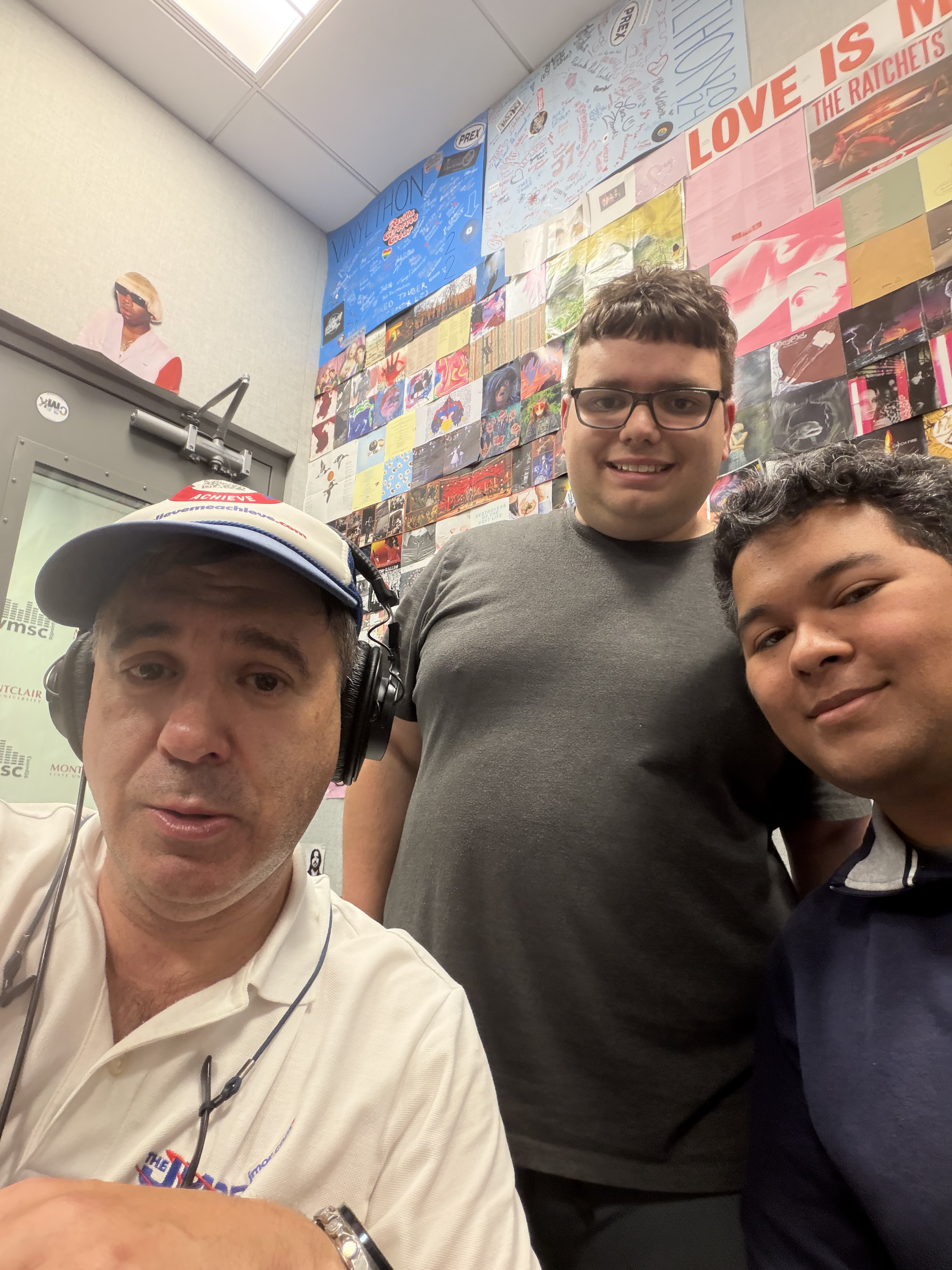
John C. Morley on WMSC 90.3 FM: A Conversation About Burnout, Ambition, and Drained to Driven
On Thursday, October 1, 2026, at 9:00 AM, I had the opportunity to appear as a guest on WMSC 90.3 FM, The Voice of Montclair State University, for a conversation that brought together several important parts of my professional and academic life. We discussed ideas connected to my book, Drained to Driven: A Motivational Guide to Overcoming Burnout and Reclaiming Your Ambition, while also exploring broader questions about burnout, ambition, the pressures facing students and professionals, and what it means to pursue meaningful goals without letting the pursuit itself become unsustainable.
I want to begin by expressing my sincere appreciation to WMSC and Montclair State University for the opportunity and hospitality. Rather than naming individuals, I believe it is appropriate to recognize the station collectively, because a successful broadcast is never the work of only the people whose voices happen to be heard on the air. Behind every program are people contributing to production, scheduling, engineering, programming, communications, station operations, and the many details required to create a professional broadcast environment. Being welcomed into that environment as a guest was something I genuinely appreciated.
As someone who has spent years producing media and hosting podcasts myself, I also understand what it means when another program gives a guest access to its platform and audience. An interview is not simply an opportunity for the guest to promote a book, business, speaking engagement, or personal brand. It is an invitation to participate in a conversation that belongs first to the audience. I believe the guest has a responsibility to arrive prepared, listen carefully, respond thoughtfully, respect the host's direction, and contribute ideas that make the audience's time investment worthwhile.
That philosophy was top of mind during my WMSC appearance.
More Than an Interview About a Book
Drained to Driven provided a natural foundation for our conversation because burnout has become relevant at virtually every stage of people's personal, academic, and professional lives. Students experience pressure from academics, employment, finances, relationships, career planning, family responsibilities, and uncertainty about the future. Professionals may be managing deadlines, customers, employees, organizational expectations, family responsibilities, and the feeling that they must remain continuously available. Entrepreneurs often experience another layer of responsibility because the boundaries between the business and the person running it can become increasingly difficult to maintain.
Burnout is particularly important to discuss because it does not always look the way people expect. Someone can continue working, attending class, meeting deadlines, running a business, responding to messages, helping other people, and fulfilling responsibilities while becoming progressively more depleted. From the outside, that person may appear productive and successful. Internally, motivation may decline, creativity may become harder, patience may shorten, and activities that once felt meaningful may gradually begin to feel like obligations.
That is one of the central ideas behind Drained to Driven. The objective is not to convince ambitious people to stop being ambitious. I believe ambition can be enormously positive when it gives people the energy to learn, create, build, contribute, and pursue meaningful goals. The challenge is learning how to distinguish healthy drive from patterns that continually consume energy without allowing us to recover, reflect, or determine whether what we are pursuing still deserves the amount of ourselves we are giving to it.
A good interview allows those ideas to move beyond the pages of a book. Rather than simply explaining what I wrote, I value opportunities to explore why these subjects matter, how they appear in everyday life, and how they connect with other issues affecting the audience. That ability to move naturally from one subject into another is one of the things I enjoy most about participating in radio, podcast, television, and other media conversations.
Why Burnout Is an Important Conversation on a College Campus
Discussing burnout in a university environment is particularly meaningful because burnout is not exclusively a problem that begins after someone has spent decades in the workforce. Students may face many of the same pressures that affect established professionals, though those pressures can take different forms. Academic performance, employment, internships, career decisions, financial concerns, family expectations, relationships, extracurricular commitments, and uncertainty about what comes after graduation can create a demanding combination of responsibilities.
Technology has made that environment even more complicated. Students and professionals alike now live in a world in which communication rarely stops completely. Another email to read, another notification to check, another assignment portal to visit, another message waiting for a response, and another social media feed offering an endless opportunity to compare our lives with carefully selected pieces of someone else's. Constant connectivity can make activity feel unavoidable, and rest feel strangely unproductive.
That is why I believe conversations about burnout belong on college campuses as much as they belong in corporate conference rooms. Students should not have to wait until they are well into their careers to learn that protecting their energy, developing boundaries, recognizing unhealthy patterns, and understanding their own relationship with ambition are legitimate parts of long-term success. Those lessons can be valuable before a career begins, not simply after exhaustion has already become a problem.
The subject also creates an opportunity to challenge a misconception that I believe deserves more attention: being exhausted is not proof that someone is committed. Constant activity does not necessarily indicate meaningful progress, and a schedule filled from morning until night does not automatically mean that the things occupying that schedule are moving someone toward the life or career they actually want. Sustainable achievement requires more than endurance. It requires judgment about where our time and energy go and whether those investments still align with what matters to us.
Bringing Professional Experience and Graduate Education Together
My WMSC appearance had another layer of significance for me because I am currently a graduate student at Montclair State University. Returning to graduate education while continuing my work as an entrepreneur, engineer, author, podcast host, video producer, and keynote speaker has reinforced my belief that learning has no expiration date.
I do not see professional experience and education as competing forces. Experience provides context for what we learn, while education can challenge assumptions we have developed through experience. When those two perspectives interact, they can create questions and insights that neither would necessarily produce on its own. That is particularly important today because technology, business, communications, media, and the professional environment are changing too rapidly for anyone to assume that what they learned years ago will remain sufficient indefinitely.
Artificial intelligence is an obvious example. AI is already changing how people research, communicate, create, analyze information, market businesses, learn, and make decisions. Students preparing to enter professional careers are doing so at a time when some of the tools, expectations, and even occupations surrounding those careers may change considerably over the next several years. Professionals who have already established careers face a similar challenge because experience remains valuable, but experience must increasingly coexist with adaptability.
As both a professional and an active graduate student, I have an interesting perspective on these changes. I can look at them through the lens of someone who has spent decades in business and technology while also experiencing the contemporary academic environment firsthand. That combination creates opportunities for conversations about lifelong learning, career development, technology, entrepreneurship, student success, professional adaptation, and the increasingly important ability to continue learning throughout one's life.
Understanding Both Sides of the Microphone
One of the experiences I bring to guest appearances is an understanding of what happens on both sides of an interview. Having spent years hosting podcasts, producing media, interviewing guests, creating video, and communicating with audiences, I know that a successful interview requires cooperation between the host and guest. The strongest conversations rarely happen when one person delivers prepared talking points while the other waits for an opportunity to ask the next question.
A guest needs to listen. The question matters, but so does the reason behind it. Sometimes the most interesting part of an interview comes from a follow-up neither the host nor the guest could have predicted. Being comfortable enough with the subject to follow those moments can transform a standard question-and-answer session into a genuine conversation.
At the same time, a guest has to understand the audience. A conversation about artificial intelligence on a technology program may appropriately become technical. The same subject on a general-interest radio program may need to focus on how AI affects everyday work, privacy, education, creativity, or careers. A conversation about burnout with executives may take a different direction from a conversation about burnout with college students. The underlying knowledge may be related, but how you communicate it should reflect the people listening.
That adaptability is important to me whenever I participate in someone else's program. My goal is not to force every host through the same sequence of subjects or repeat the same interview. My goal is to understand the program, respond as the conversation develops, and contribute perspectives appropriate to that particular audience.
Conversations That Can Move Beyond Burnout
Although Drained to Driven and burnout provided an important foundation for my WMSC appearance, my professional experience lets me extend conversations into several interconnected areas. Decades of entrepreneurship provide a practical foundation for discussing business ownership, leadership, relationships, setbacks, decision-making, resilience, customer service, changing markets, and the reality that building something rarely follows a perfectly predictable path.
My engineering and technology background opens another group of subjects, particularly artificial intelligence, cybersecurity, privacy, digital transformation, and the relationship between people and the technology surrounding them. These issues are increasingly difficult to separate from broader conversations about education, careers, business, creativity, and personal development because technology is becoming embedded in nearly every part of modern life.
I am particularly interested in the human questions surrounding technological change. What skills become more valuable as artificial intelligence becomes more capable? How should students prepare for careers that may evolve substantially during their working lives? How can businesses benefit from new technologies while remaining thoughtful about cybersecurity and privacy? What happens to human creativity when machines can generate sophisticated content almost instantly? How do we use powerful tools without surrendering the judgment, curiosity, originality, and relationships that make human contribution valuable?
These questions are not limited to engineers or computer scientists. They affect entrepreneurs, educators, students, professionals, creators, businesses, and families. They also show why I enjoy interviews that can cross traditional subject boundaries. Burnout can naturally lead to a discussion of technology and constant connectivity. Technology can lead into AI. AI can lead into careers and education. Education can lead into lifelong learning. Entrepreneurship can lead into resilience, leadership, communication, or relationships. These connections often create the most interesting parts of a conversation.
Why College Radio Continues to Matter
College radio holds an important place in media because it gives students opportunities to develop practical skills in broadcasting, production, journalism, interviewing, communications, programming, and station operations. There is a significant difference between studying communication and communicating with a real audience, just as there is a difference between learning interviewing concepts and listening closely enough to formulate a meaningful follow-up question while the conversation is happening.
Those experiences matter because they require students to translate knowledge into practice. The microphone eventually goes live. The interview eventually begins. Technology occasionally behaves differently than expected. A conversation may take an unexpected direction. Learning to respond to those situations builds abilities that can carry far beyond a radio studio.
As someone who values lifelong learning, I appreciate environments where education and practical experience meet. WMSC represents that kind of environment, and participating as a guest allowed me to contribute while also experiencing the station from the other side of the microphone.
It was particularly meaningful to do that at Montclair State University, where I am currently pursuing my graduate education. My professional work and academic journey are different parts of the same larger commitment to continue learning, creating, communicating, and challenging myself to develop new capabilities.
A Good Guest Should Serve the Program, Not Take It Over
Because I host programs myself, I have developed strong views about what makes someone valuable as a guest. Credentials matter because they establish why someone may have useful knowledge or experience to share, but credentials alone do not create a good interview. A successful guest also needs to communicate clearly, listen carefully, respect the host, understand the audience, and recognize that the purpose of the appearance is to contribute to the program rather than dominate it.
I believe preparation matters, but it should not make a conversation sound rehearsed. A guest should understand the subjects being discussed well enough to respond naturally rather than searching for opportunities to insert predetermined promotional messages. The host should have room to challenge an idea, change direction, ask a difficult follow-up question, or explore something unexpected.
That is the standard I bring to my own guest appearances. My background offers many potential discussion points, but the specific conversation should be shaped by the program and its audience. A college station may want to explore student burnout, careers, AI, and lifelong learning. A business podcast may focus on entrepreneurship, sustainable performance, leadership, or technology. A technology program may want to discuss AI, cybersecurity, and privacy. A personal development program may concentrate on resilience, ambition, creativity, motivation, or the ideas behind Drained to Driven.
The objective is not to make every interview identical. The objective is to bring enough experience and versatility to make each interview relevant.
Thank You to WMSC 90.3 FM and Montclair State University
I am sincerely grateful to WMSC 90.3 FM and Montclair State University for welcoming me and providing the opportunity to participate in this conversation. Being invited onto another media platform is something I value because every station and program has its own audience, identity, and approach to storytelling and discussion.
This appearance was particularly meaningful because it brought together my work as an author, entrepreneur, engineer, podcast host, media producer, speaker, and graduate student. It allowed me to discuss Drained to Driven while also joining a broader conversation about challenges that affect students and professionals alike.
I also appreciate the work that happens beyond what listeners hear during an interview. Broadcasting requires preparation, technical knowledge, coordination, programming, and people who care about creating something worthwhile for their audience. My thanks extend to the WMSC organization and everyone whose work keeps that platform available to the Montclair State University community and its listeners.
Listen to My WMSC 90.3 FM Appearance
My WMSC 90.3 FM guest appearance aired on Thursday, October 1, 2026, at 9:00 AM. For those who couldn't hear the original broadcast, I will provide the replay so visitors can listen to the conversation directly.
[LISTEN TO THE INTERVIEW ON iHEARTRADIO]
The recording gives listeners the chance to hear the actual discussion and gives future hosts and producers an example of how I approach an interview as a guest.
That last point matters because a previous interview can communicate what a biography cannot. A producer can hear how a guest answers questions, develops ideas, responds to follow-ups, communicates with the host, and handles a live or recorded conversation. As I continue appearing on additional programs, I plan to document those conversations through the Guest Appearances section of JCM Academy, so listeners and media professionals can easily explore them.
Continuing the Conversation Beyond WMSC
My appearance on WMSC is one conversation in a much larger journey, and I look forward to additional interviews with podcasts, radio programs, television and streaming programs, college and university stations, business media, technology programs, and other platforms where my experience can contribute to thoughtful discussion.
As an author, entrepreneur, engineer, podcast host, media producer, keynote speaker, lifelong learner, and graduate student, I can contribute to conversations about burnout, resilience, sustainable performance, artificial intelligence, cybersecurity, privacy, entrepreneurship, leadership, creativity, communication, motivation, lifelong learning, career development, student success, and the changing relationship between people and technology. Those subjects can be approached individually or connected based on the host's and audience's interests.
My goal with every guest appearance is straightforward: to contribute informed perspectives, engage thoughtfully with the host, and help create a conversation that delivers genuine value to the audience. I understand what it takes to prepare and produce a program because I have done that work myself, and I respect the responsibility that comes with being invited onto someone else's platform.
Podcast hosts, radio and television producers, college and university media organizations, journalists, student broadcasters, and other media professionals interested in arranging an interview are invited to contact JCM Academy to discuss their program, audience, format, and potential topics. I welcome both focused interviews centered on a particular area of expertise and broader conversations that allow several related subjects to develop naturally.
My sincere thanks again to WMSC 90.3 FM and Montclair State University for the opportunity to share this conversation. I appreciated the experience, the platform, and the chance to discuss ideas that I believe deserve continued attention.
I look forward to where the next conversation leads.
Stay Driven,
John C. Morley
Author of Drained to Driven
Serial Entrepreneur, Engineer, Podcast Host and Keynote Speaker
JCM Academy
Inspire. Empower. Achieve.
Leave A Comment
Please login to add a comment!
Comments (0)